Computer Power Supply Destruction
It looks like a dull metal box. Inside, a computer power supply unit (PSU) is one of the most dangerous components to take apart — and one of the most rewarding to recycle properly. Every desktop computer ever made has one, and every office refresh produces a pile of them. Here’s why power supplies deserve special treatment, and how EwasteCleanup destroys and recycles them safely.
What’s inside a power supply
A PSU converts mains electricity into the low-voltage DC power a computer needs. To do that job, it packs in:
- Capacitors — including large electrolytics that can hold a dangerous charge for days after unplugging.
- Transformers — wound with valuable copper wire.
- Aluminium heatsinks — bulky and highly recyclable.
- Steel casing — the box itself, fully recyclable.
- Printed circuit boards — with lead solder and small amounts of precious metals.
- Fans and wiring — copper, plastics and small motors.
It’s a concentrated package of recoverable metals — and genuine hazards.
Why power supplies demand respect
Two reasons: stored energy and toxic materials. Large capacitors can retain a painful — occasionally dangerous — charge long after the PSU is unplugged, which is why dismantling one at home or in the office is a bad idea. Meanwhile, older units contain lead solder and other substances that don’t belong in landfill or in untrained hands. California classifies e-waste accordingly, and our DTSC registration (CAL000422160) exists precisely so materials like these are handled lawfully.
ATX, SFX and server power supplies
Not all PSUs are built alike. Desktop ATX units are the most common — the familiar box in every tower PC. Small-form-factor (SFX) supplies pack the same job into tighter spaces for compact builds. Server PSUs are a different breed: hot-swappable, redundant modules designed for round-the-clock operation, often with higher efficiency ratings. We process all of them, along with external power bricks and adapters. Whatever form factor your refresh produces, the materials inside — copper, aluminium, steel, boards — follow the same recovery path.
Our destruction process, step by step
- Intake and sorting. PSUs arrive via our free business pickup or facility drop-off, and are sorted from the general e-waste stream.
- Capacitor discharge. Trained technicians safely discharge stored energy before any dismantling begins.
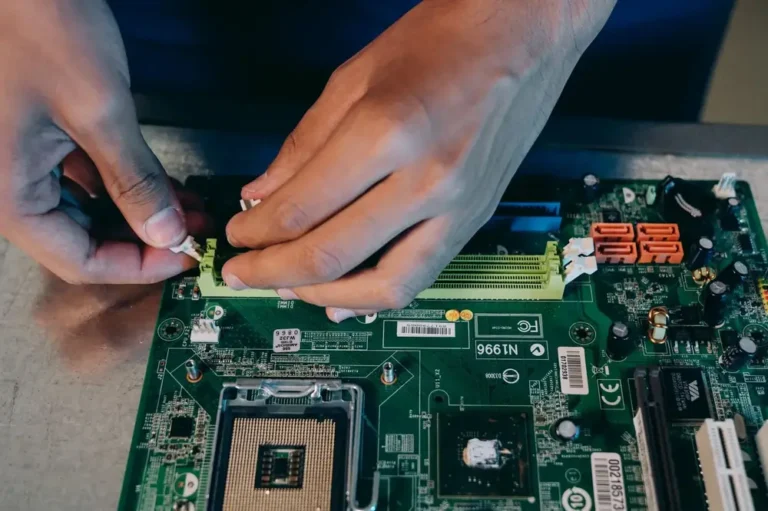
- Dismantling. Fans, casings, heatsinks and circuit boards are separated by hand.
- Shredding. Residual assemblies go through industrial shredding.
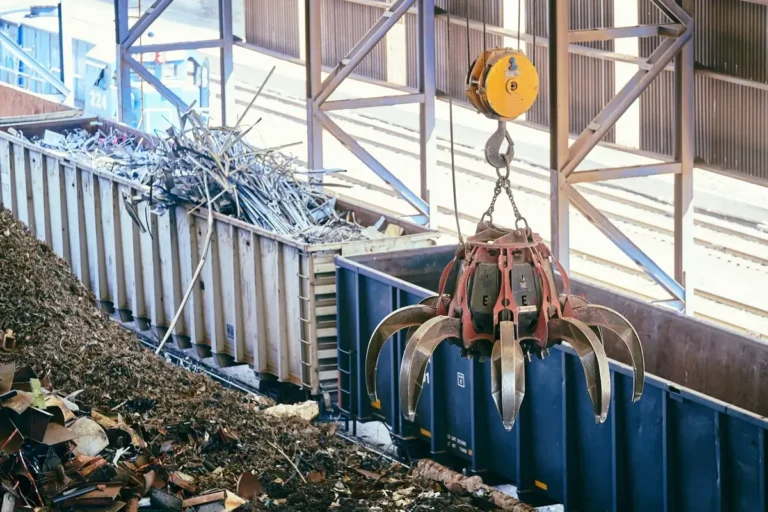
- Material separation. Magnets, eddy currents and density separation recover copper, aluminium, steel and circuit-board fractions.
Every step runs under our R2v3 certification — held since 2018 — with ISO 14001 and RIOS backing the environmental controls.
What gets recovered
- Copper — from transformer windings and wiring; endlessly recyclable without quality loss.
- Aluminium — heatsinks melt down into new products using a fraction of the energy of virgin production.
- Steel — casings join the general steel recycling stream.
- Circuit boards — go to certified smelters where gold, silver and palladium are recovered.
- Plastics — fans and housings are granulated for reprocessing.
Almost nothing is wasted — which is rather the point of the exercise.
Repair or recycle?
A quality PSU can last a decade, and repair sometimes makes sense for high-end units. But for business fleets, the maths usually favours replacement: ageing PSUs lose efficiency, lack modern protections, and a single failure can take a motherboard with it. When the decision is recycle, don’t let them pile up — capacitors degrade, and a box of old PSUs is dead weight with a small but real hazard attached. Our free pickup takes them off your hands, documents the transfer, and returns every recoverable gram to the materials stream.
Handling PSU disposal in your business
Power supplies rarely retire alone — they arrive with the desktops they powered. The smartest approach is to treat the whole system as a unit: inventory decommissioned PCs, keep PSUs with their machines, and hand the lot to a certified recycler in a single pickup. Don’t stockpile loose PSUs indefinitely; capacitors degrade over time, and a growing box of ageing units is a small but genuine hazard in a storeroom. If you’re refreshing a server room, note that redundant server PSUs can have resale value while still new — but once they’re e-waste, the same rules apply. Our free business pickup covers everything from a single desktop to a full data-centre refresh, with documentation for your asset register.
No data — but no shortcuts either
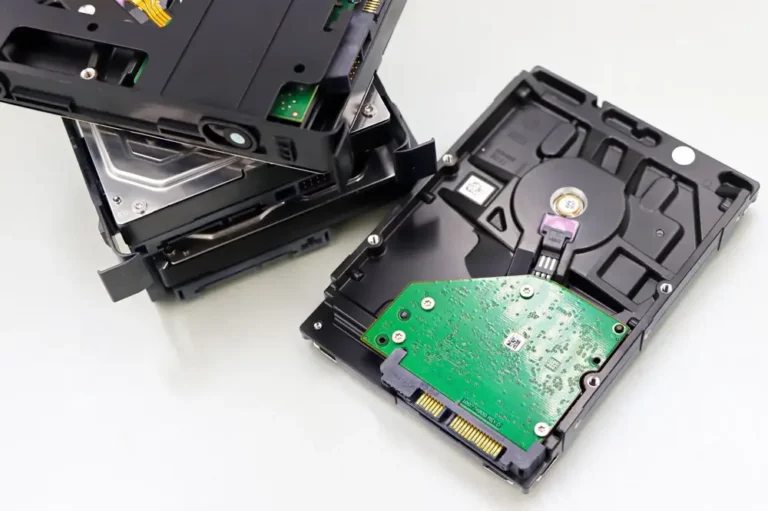
Power supplies hold no data, so there’s no sanitisation step — but they travel through the same documented chain of custody as everything else we handle. When a business hands us a pallet of decommissioned desktops, the PSUs are inventoried and tracked alongside the drives. Rigour is a habit, not a menu option.
Have power supplies — or complete systems — to clear out? Our electronics recycling services take the lot, with free pickup for businesses across Long Beach, Los Angeles, Orange County and San Diego. We’ve served Southern California since 1998, Monday to Friday, 8am to 4pm.
Call 323-300-8243 or toll-free 1-833-392-7834 to schedule your pickup.