How DoD Standards Affect Data Disposal
When government agencies retire computers, the data on those drives is not simply deleted — it is destroyed to some of the toughest standards on earth. Those Department of Defense standards have shaped how every serious data-destruction company operates, including EwasteCleanup. Whether you work under government contracts, handle sensitive client data or simply want the strongest protection available, it pays to understand what DoD standards are and how they affect the way your data is disposed of.
What “DoD standards” actually means
The phrase comes from DoD 5220.22-M, the US Department of Defense’s National Industrial Security Program Operating Manual, which for years prescribed how sanitisation of classified media should be performed — including a well-known multi-pass overwrite procedure. Over time, NSA/CSS guidance and then NIST Special Publication 800-88 superseded many of those prescriptions, particularly for modern flash media where overwriting is unreliable.
Today, when a vendor says “DoD standard” or “DoD wipe”, they generally mean overwrite-based sanitisation descended from that lineage. It remains useful shorthand for “stronger than a simple format” — but the current federal benchmark, and the one EwasteCleanup follows, is NIST SP 800-88.
A brief history of DoD wiping standards
The DoD’s overwrite specifications date back to an era of floppy disks and early hard drives, when a single pass of zeros might genuinely leave magnetic traces a laboratory could detect. The famous multi-pass sequence — a character, its complement, then random data — was designed for that world. As drive densities soared, researchers showed that a single verified overwrite defeats all practical recovery on modern magnetic media, and NIST SP 800-88 became the authoritative guidance. The DoD itself moved on: current policy references NIST standards rather than the old manual. The lesson for businesses is simple — follow the current standard, not the legend.
Clear, purge, destroy: the three levels of sanitisation
NIST SP 800-88 defines three progressively stronger methods:
- Clear — overwriting the media using software or firmware-level commands, then verifying the overwrite succeeded. Suitable for lower-risk reuse.
- Purge — advanced techniques such as degaussing, block erase or cryptographic erase that defeat even laboratory recovery attempts.
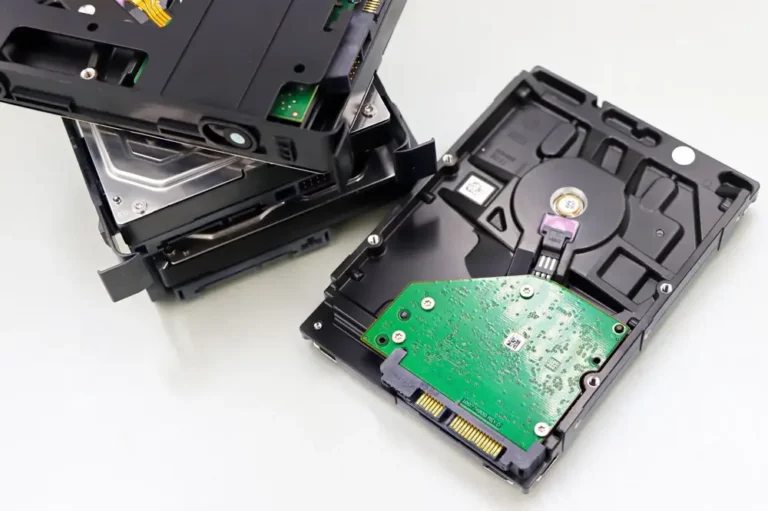
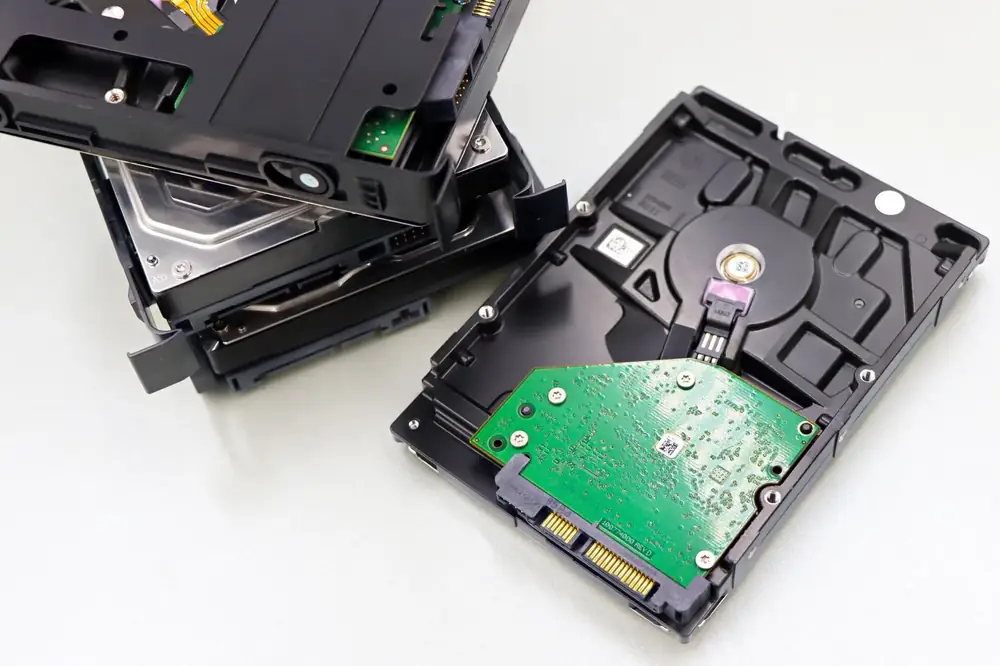
- Destroy — physical destruction through shredding, crushing or disintegration, rendering the media completely unusable.
The right level depends on the sensitivity of the data and what happens to the media afterwards. For highly sensitive information — or whenever there is any doubt — destruction is the answer. A shredded drive cannot be recovered, audited or argued with.
Why overwriting alone is no longer enough
The classic DoD multi-pass overwrite was designed for magnetic hard drives, where every sector is addressable and overwrite commands reach the whole platter. Modern solid-state drives do not work that way. Wear-levelling algorithms spread writes across flash chips, over-provisioned spare areas sit outside the operating system’s reach, and a “successful” overwrite can leave recoverable fragments behind. Degaussing — another classic technique — is equally useless against flash, which stores data in transistors rather than magnetic domains. This is exactly why NIST SP 800-88 moved the industry towards cryptographic erase and physical destruction for flash media. At our facility, SSDs, USB drives and phone storage go straight to the shredder: when the chips are in fragments, no laboratory on earth is reconstructing them.
How DoD standards affect your disposal decisions
If your business holds government or defence-adjacent contracts, your agreements may explicitly require DoD-level or NIST 800-88 sanitisation, with documentation to prove it. Failing an audit on media sanitisation can cost you the contract.
Even without a contractual requirement, there are strong reasons to hold yourself to the toughest standard:
- One standard satisfies every auditor. If your process meets the strictest benchmark, lesser requirements are covered automatically.
- Client confidence. Being able to say your data destruction follows DoD-grade standards wins trust — and business.
- Regulatory overlap. HIPAA, financial regulations and state privacy laws all demand secure disposal; DoD-grade processes exceed them all.
- Future-proofing. Standards only tighten. Building the strictest process now means never scrambling to catch up.
Our process: certified destruction, documented
At EwasteCleanup, every data-bearing device is sanitised to NIST SP 800-88 or physically shredded at our Santa Fe Springs facility. Our process is R2v3 certified — held since 2018 — and backed by ISO 14001 and RIOS certifications. Every load is tracked with a documented chain of custody, and you receive certificates of destruction listing serialised assets: exactly the paperwork auditors and contracting officers want to see.
Beyond DoD: the wider compliance picture
DoD-grade destruction is the gold standard, but it is not the only framework shaping our work. Healthcare clients rely on our HIPAA-compliant disposal process, and every engagement is informed by the privacy realities of technology recycling. Our DTSC registration (CAL000422160) and CalRecycle certification (CEWID 116335) cover the environmental side of the same operation.
Whatever standard you answer to, our data destruction services meet it — with free pickup for businesses across Los Angeles, Orange County, San Diego and Long Beach. We have served Southern California since 1998, Monday to Friday, 8am to 4pm.
Call 323-300-8243 or toll-free 1-833-392-7834 to discuss your compliance requirements, or email info@ewastecleanup.com.